


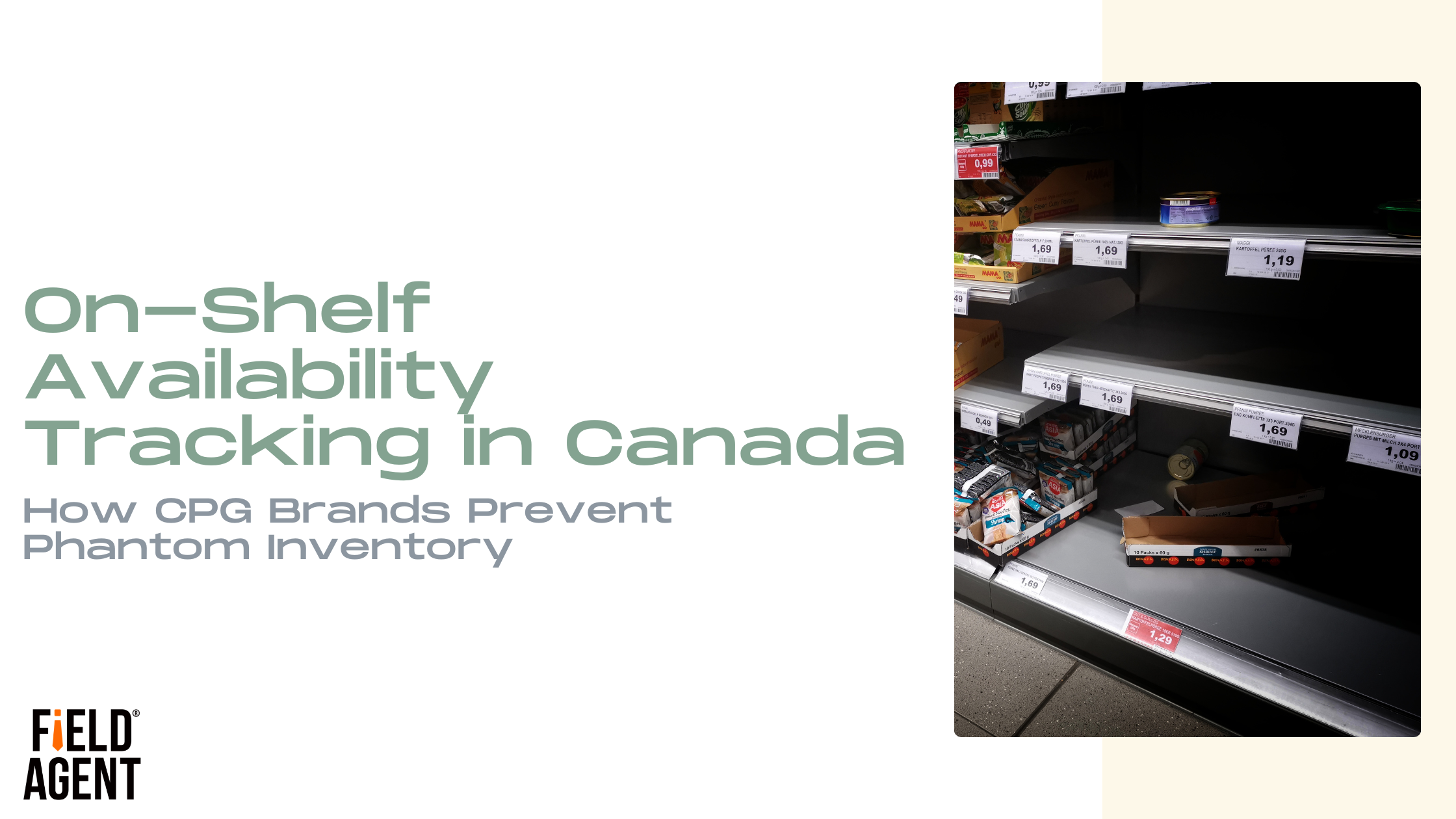
On-Shelf Availability Tracking in Canada: How CPG Brands Prevent Phantom Inventory
In Canada's highly consolidated grocery landscape, maximizing on shelf availability is one of the most critical drivers of revenue retention and brand equity. However, even the most sophisticated retail operations are frequently undermined by a phenomenon known as phantom inventory. When automated point-of-sale systems fail to match physical shelf realities, Canadian Consumer Packaged Goods (CPG) brands face silent stockouts, crippled auto-replenishment systems, and billions of dollars in lost sales.
As shopper loyalty rapidly shifts in 2026, understanding how to measure, track, and remediate shelf-level execution gaps is paramount. This comprehensive guide explores the root causes of ghost SKUs and provides actionable strategies for CPG brands to secure their shelf space using modern retail store audits.
What is Phantom Inventory?
Phantom inventory (also known as "ghost inventory" or "ghost SKUs") occurs when a retailer’s enterprise inventory software registers product units as available in the store, but zero units are actually present on the physical sales floor.
Unlike a traditional stockout—where a system recognizes an empty shelf and automatically triggers a purchase order—phantom inventory actively halts auto-replenishment. Because the algorithm believes the stock is healthy, no new shipments are requested, leaving store shelves bare for weeks.
As Victoria Branch, Content Lead at SupplierWiki, explains: "Phantom inventory is a silent killer because it bypasses standard operational alarms. While a dashboard may show 98% in-stock levels, the actual shelf may be empty—freezing automated replenishment engines and starving the store of inventory."
This discrepancy creates a false demand signal. Category managers reviewing point-of-sale (POS) data see flat or declining sales and assume consumer interest has waned, completely unaware that consumers simply cannot access the product. You can learn more about identifying these false signals in our guide on how to track out-of-stock issues in retail before they hurt sales.
Why Do Ghost SKUs Occur in Retail Operations?
Inventory distortion typically stems from four major structural breakdowns at the store level:
- Unrecorded Shrinkage: Theft, shoplifting, or accidental product breakage that store associates fail to scan out of the inventory system.
- Receiving and Scanning Errors: Mis-scans during intake, such as receiving a single case instead of a full pallet, or logging a specific flavour variant under an incorrect SKU barcode.
- Backroom Trapping: Stock sitting idly in receiving bays, top-shelf overstock, or misplaced in the wrong aisle, rendering it totally invisible to shoppers while technically present in the building.
- New Product Launch Failures: Newly listed items often fail to transition from backroom pallets to the retail floor due to delayed planogram execution, keeping products MIA during critical launch windows.
The Financial Impact of Poor On-Shelf Availability
The financial and operational repercussions of phantom inventory in 2026 are severe. Out-of-stock conditions and retail execution failures cost Canadian retailers a staggering $63 billion in lost sales annually.
Today's consumers simply will not wait for retailers to resolve system inaccuracies. Market data reveals the immediate consequences of empty shelves:
- 61% of Canadian shoppers report encountering out-of-stock items on their last grocery trip.
- 91% of shoppers will instantly purchase an alternative product rather than wait for a restock.
- 43% of consumers switch to a competitor brand the exact moment they see an out-of-stock tag.
- 39% of in-store shoppers abandon their entire basket if a key planned item is unavailable.
As Aljay Ambos, Retail Industry Analyst, notes: "One missing product and loyalty? Gone. Cart? Abandoned. Even the nice brands don't get a pass in 2026."
Methods for Tracking and Measuring On-Shelf Availability
To combat systemic inaccuracies and protect market share, Canadian CPG brands must actively verify shelf conditions. There are three primary methodologies used to measure on shelf availability, each with distinct advantages and limitations.
1. Point-of-Sale (POS) Data Analytics
POS analytics rely on electronic register sales logs to estimate inventory. While this method offers high-volume, nationwide data, it is entirely passive. Furthermore, it is completely blind to phantom inventory, as an algorithmic prediction cannot see an empty shelf or trapped backroom stock.
2. AI Shelf Monitoring (Computer Vision)
Fixed in-store cameras and robots use image processing to scan shelves. While AI can process photos rapidly, it suffers from the "front-facing illusion." Fixed cameras cannot see behind the first row of products, nor can they walk into a backroom to locate missing inventory. For a deeper breakdown of this technology, read our analysis on AI Shelf Monitoring vs Human Store Checks.
3. Crowdsourced Retail Store Audits
Retail audits utilizing a decentralized network of mobile shoppers provide the most accurate ground truth. Human auditors can physically inspect backrooms, look behind shelf tags, verify planogram compliance, and instantly report discrepancies with timestamped, GPS-verified photo evidence.
How Field Agent Resolves Phantom Inventory in Canada
At Field Agent, our mobile-first, crowdsourced retail intelligence platform directly connects CPG brands with our network of over 340,000 on-demand shoppers across Canada. By turning everyday consumers into on-site auditors, we help brands instantly identify and eliminate phantom inventory through real-time mobile audits.
When anomalies in sales data trigger suspicion, we dispatch our shoppers to conduct targeted store audits. Our local agents locate the category, capture GPS-stamped photo proof, and record physical stock counts. When an audit proves the physical shelf count is zero while systems report positive stock, brands can force an immediate manual inventory adjustment to re-trigger auto-replenishment.
But identifying the issue is only the first step. Through our integrated partnership with Hive Merchandising, detected issues can be quickly handed off so local merchandising teams can step in to pull trapped stock from backrooms or restock shelves, turning out-of-stocks into captured sales within days rather than weeks.
4 Strategic Steps to Prevent Phantom Inventory
To proactively secure retail spaces and prevent out-of-stocks in highly consolidated Canadian retail environments, CPG leaders should implement the following strategic framework.
1. Shift from Reactive Tracking to Proactive Auditing
Do not rely exclusively on passive POS reporting. With 86% of retailers depending on automated replenishment systems that lack visual verification, brands must incorporate regular spot-check retail audits across high-volume banners. Catching ghost SKUs early prevents auto-replenishment engines from freezing.
2. Prioritize High-Risk Execution Windows
Certain periods carry a much higher risk of inventory distortion. Deploy a store audit during the following critical windows:
- New Product Launches: Verify that newly listed SKUs have successfully transitioned from the backroom to the sales floor.
- Promotional Weeks: Ensure paid promotional endcaps and displays are fully compliant on Day 1 of the circular.
- Post-Reset Periods: Retail shelves lose approximately 10% of their planogram compliance within just seven days of a major category reset. Check facings immediately following these resets.
3. Calculate Your Store Audit ROI
Executing a continuous auditing strategy must make financial sense. Utilize the "11% Rule" framework: research demonstrates that correcting out-of-stocks and execution gaps yields an average sales lift of 11% on audited SKUs. You can dive deeper into the ROI of retail audits here.
4. Pair Real-Time Visibility with Agile Merchandising
Data without action is just overhead. When planning your retail operations strategy, ensure that you have a rapid remediation plan in place. Combining crowdsourced real-time visibility with local merchandising resources guarantees that detected stockouts are physically fixed on the spot, resetting the inventory loop and saving the sale.
Securing Your Shelf Space in 2026
Under Canada’s strict Grocery Code of Conduct and an intensely competitive consumer landscape, CPG brands cannot afford to let phantom inventory sabotage their hard-earned retail placements. By transitioning away from passive dashboards and adopting on-demand retail store audits, brands can actively protect their on shelf availability, recover lost revenue, and ensure their products are always within arm's reach of the Canadian consumer.
- << Previous Post
- Next Post >>