


But are consumers genuinely interested in these products, or is this simply the latest food trend?
We asked 1,544 Field Agent shoppers about the role protein plays in their purchasing decisions, the products they have tried and what brands should understand before adding another high-protein claim to the shelf.
The results suggest that demand is real, but a protein claim alone is not enough to win shoppers over.
Protein matters to shoppers, and its influence is growing
For most of the shoppers we surveyed, protein is already an important consideration when choosing food and beverages. In fact, 94% said protein is at least somewhat important to them, including 26% who described it as extremely important.
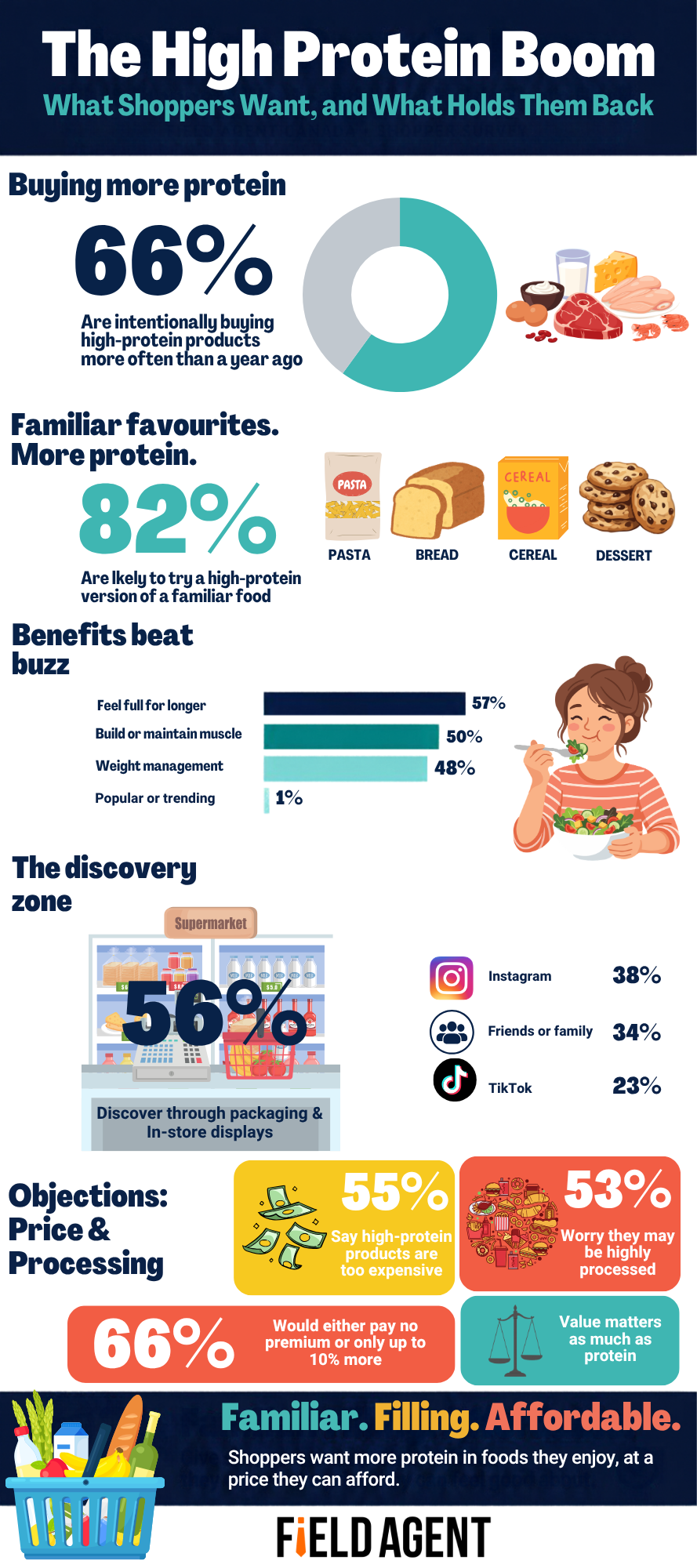
More importantly, shoppers say their behaviour is changing. Two-thirds (66%) are intentionally purchasing high-protein products more often than they were one year ago. That includes 27% who say they are buying them much more often.
Only 2% report purchasing high-protein products less often than they did last year.
This tells us that the high-protein movement is more than a conversation happening on social media. It is influencing reported purchasing behaviour and creating opportunities across the grocery store.
Protein is moving well beyond shakes and bars
Traditional sources of protein remain the most commonly purchased. Over the past three months, shoppers reported buying eggs (84%), meat, poultry or fish (83%), and Greek or high-protein yogurt (80%).
However, interest is spreading into a much broader range of categories:
- 59% purchased protein bars
- 55% purchased protein shakes or powders
- 50% purchased cottage cheese
- 47% purchased high-protein milk or dairy beverages
- 43% purchased high-protein bread, wraps or bagels
- 39% purchased high-protein snacks, chips or crackers
- 39% purchased high-protein cereal or oatmeal
- 37% purchased high-protein pasta or noodles
- 26% purchased plant-based high-protein products
- 24% purchased high-protein desserts or baked goods
Just 1% selected “none of the above.”
This expansion is significant for brands. Protein is no longer a niche benefit reserved for fitness-oriented products. Shoppers are finding it in everyday meals, snacks and indulgent categories as well.
Shoppers want benefits, not buzz
Although protein is highly visible in current food and wellness conversations, shoppers are not telling us they buy these products simply because they are popular.
Their leading motivation is to feel full for longer, selected by 57% of respondents. Half choose high-protein products to build or maintain muscle, while 48% do so to support weight management. Other motivations include increasing energy (41%), supporting healthy aging (26%) and making meals or snacks more nutritious (23%).
By contrast, only 1% included “because they are popular or trending” among their top reasons.
For marketers, this distinction matters. Calling a product “high protein” may attract attention, but messaging will be stronger when it connects the claim to a relevant, practical benefit. Shoppers want to understand what the added protein can do for them.
Familiar products offer an appealing entry point
One of the clearest opportunities is to add protein to products shoppers already know and enjoy.
When we asked how likely they would be to try a high-protein version of a familiar product, such as pasta, bread, cereal, Kraft Dinner or a dessert, 82% said they would be likely to try it. Nearly half of all respondents (48%) said they would be very likely.
This suggests shoppers do not necessarily need an entirely new eating routine to increase their protein intake. For many, an upgraded version of a familiar favourite may be the easier and more appealing choice.
However, brands should still consider whether the benefit feels credible and useful within the category. When asked for their overall opinion of the trend, the most common response, selected by 35%, was that high-protein products are useful, but only in certain categories. Another 15% believe protein is being added to too many unnecessary products.
The opportunity is broad, but not unlimited.
The shelf is a major discovery channel
Where are shoppers hearing about all these new products? More than half (56%) selected product packaging or in-store displays, making the physical shelf the most commonly reported source of information about high-protein products and recipes.
Instagram followed at 38%, while 34% hear about high-protein products from friends or family. Retailer flyers, websites or apps reached 29%, followed by healthcare, nutrition or fitness professionals at 24% and TikTok at 23%.
These findings reinforce the importance of retail execution. Packaging, displays, shelf placement and point-of-sale messaging are not merely the final step in the purchase journey; they are helping shoppers discover the products in the first place.
A strong campaign can build awareness online, but brands still need to ensure that claims are easy to understand and products are visible, available and correctly merchandised in store.
A high-protein label creates interest, but also scrutiny
A protein claim generally gives shoppers a positive first impression. Six in 10 respondents said a “high protein” label makes a product seem somewhat or much healthier.
At the same time, 33% said their perception depends on the product’s other ingredients and nutrition information. Shoppers may be interested in protein, but they are still looking at the complete nutritional picture.
Their concerns make that especially clear:
- 55% believe high-protein products are too expensive
- 53% worry that they may be highly processed
- 37% are concerned they may contain too much sugar, sodium or fat
- 33% worry that the taste or texture will be different
- 20% feel there are too many protein claims to know what is meaningful
Only 8% said they have no concerns.
Brands should therefore be careful not to treat protein as a shortcut to a healthy perception. The claim can be an effective signal, but shoppers may look beyond it to decide whether the complete product delivers genuine value.
Shoppers will pay a little more, but not too much
The high-protein trend may create room for a modest price premium, but the survey results show clear limits.
Four in 10 shoppers would pay up to 10% more for a high-protein version of a product they already purchase. Another 14% would pay 11% to 20% more, while only 5% would go beyond a 20% premium.
Meanwhile, 26% would not pay more at all, and 15% said it would depend on the product.
Altogether, 66% would either pay no premium or would cap that premium at 10%. This aligns closely with price being the most frequently selected concern.
For brands considering a high-protein extension, the added benefit must feel worthwhile without pushing the product beyond what shoppers consider reasonable for the category.
What this means for brands and retailers
The high-protein movement appears to have staying power. Only 8% of surveyed shoppers described it as mostly a temporary food trend, while 17% believe it represents a lasting change in how people eat. Many others see genuine value, but only in the right types of products.
The most promising products will likely be those that combine four things: a familiar format, a clear consumer benefit, credible nutrition and an acceptable price.
For CPG brands and retailers, the opportunity is not simply to add protein to more products. It is to answer the questions shoppers are already asking:
- Does this product help me feel full, manage my weight or meet another practical goal?
- Does the protein make sense in this category?
- Is the overall nutritional profile still appealing?
- Will it taste as good as the original?
- Is the benefit worth the price?
The protein claim may earn a second look. Winning the purchase, and the repeat purchase, will depend on the answers.
See what shoppers see
Whether you are launching a high-protein innovation, evaluating packaging or measuring retail execution, Field Agent can help you understand what is happening at the shelf and how real shoppers respond.
From in-store audits and display verification to shopper insights and product trials, our nationwide network of more than 350,000 Canadian shoppers can provide the data you need to make your next move with confidence.
Ready to put your high-protein strategy to the test? Contact us to learn how Field Agent can help.